

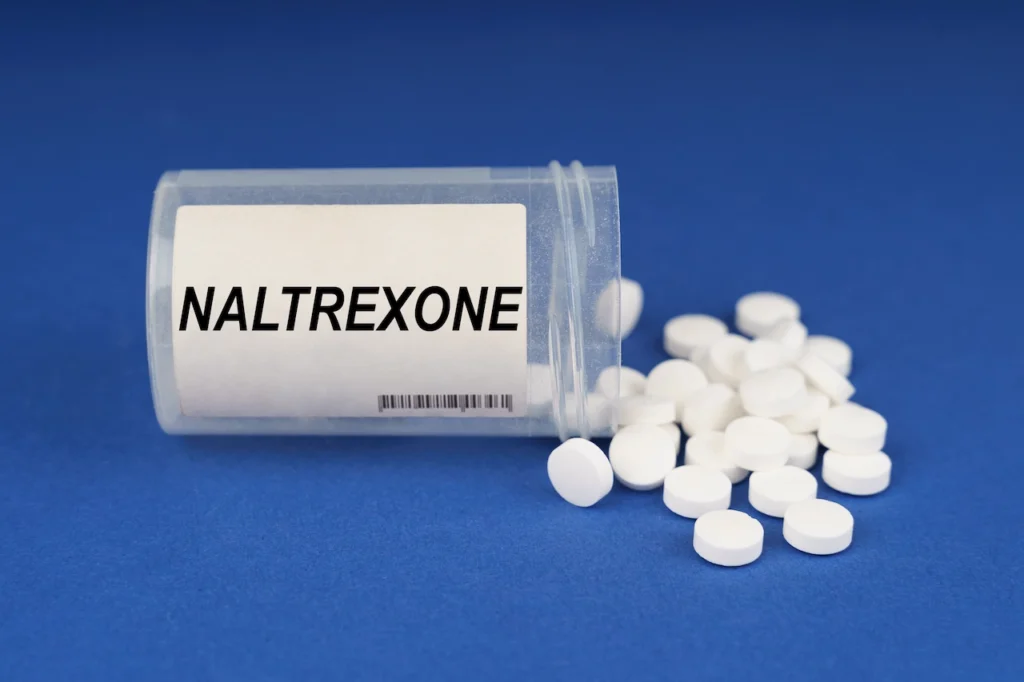
Low-dose naltrexone (LDN) is a medication that has gained attention for its potential role in managing certain chronic inflammatory, autoimmune, and pain-related conditions. At Nervana Medical, we believe patients deserve clear, honest information about how LDN works, what the research shows, and what to realistically expect.
What Is Low-Dose Naltrexone?
Naltrexone is an FDA-approved medication traditionally used at higher doses (50–100 mg) to treat opioid and alcohol dependence. Low-dose naltrexone (LDN) refers to much smaller doses, typically 1.5 to 4.5 mg daily (at times up to 12 mg daily), used off-label for a variety of chronic conditions.
“Off-label” use means the medication is prescribed based on clinical judgment and available scientific evidence, even though it is not FDA-approved specifically for that indication. This is common in many areas of medicine.
How Does LDN Work?
At low doses, naltrexone appears to work differently than it does at standard doses.
LDN temporarily blocks opioid receptors for a short period (about 2–6 hours). This brief blockade triggers the body to increase production of its own natural opioids, such as endorphins and enkephalins, which are involved in pain modulation, immune regulation, and mood.
In addition, LDN has been shown to reduce inflammation by acting on the immune system. Research suggests it may block Toll-like receptor 4 (TLR-4) on immune cells, which can decrease the release of inflammatory signaling molecules such as tumor necrosis factor (TNF) and interleukins. This immune-modulating effect appears to be unique to low doses of naltrexone.
What Conditions Has LDN Been Studied For?
LDN has been studied across a range of conditions, with varying levels of evidence.
Chronic Pain & Fibromyalgia
Some early studies suggested LDN might reduce pain in fibromyalgia. However, more recent, larger trials have shown that LDN does not significantly reduce pain compared to placebo, though it may improve certain symptoms such as cognitive “brain fog” or memory difficulties. Overall, the evidence for pain relief in fibromyalgia is mixed and modest.
Crohn’s Disease
Small studies have suggested potential improvements in symptoms and intestinal inflammation in patients with Crohn’s disease. However, major reviews have concluded that current evidence is insufficient to draw firm conclusions, largely due to small study sizes. Larger trials are ongoing.
Autoimmune & Dermatologic Conditions
LDN has shown promise in small studies and case series for inflammatory skin conditions such as Hailey-Hailey disease, lichen planus, psoriasis, hidradenitis suppurativa, and chronic pruritus. While results are encouraging, larger controlled studies are still needed.
Is LDN Safe?
LDN is generally well-tolerated and has a favorable safety profile compared to standard-dose naltrexone.
The most commonly reported side effects include:
- Vivid or unusual dreams
- Headaches
- Mild sleep disturbance (often temporary)
Serious side effects such as liver toxicity, mood changes, or withdrawal symptoms seen with higher doses of naltrexone have not been observed with LDN in clinical studies. Importantly, LDN is not addictive and has no known abuse potential when prescribed appropriately.
How Is LDN Taken?
LDN is usually taken once daily, often at night, though timing may vary by patient and condition. Because commercial low-dose tablets are not available, LDN must be prepared by a licensed compounding pharmacy.
Dosing is individualized. Many patients start at a lower dose and gradually increase to improve tolerability.
What Are the Limitations of LDN?
While LDN is promising, it is important to understand its limitations:
- It is not a cure
- Benefits are not guaranteed
- Research evidence is still evolving
- Some conditions show minimal or no benefit in controlled trials
- It may take several weeks to notice any effects
At Nervana Medical, LDN is considered one option among many, not a replacement for established treatments when those are indicated.
Is LDN Right for You?
LDN may be considered for patients seeking additional options for chronic inflammatory or autoimmune-related symptoms, particularly when conventional therapies are limited or poorly tolerated. A thorough medical evaluation is essential to determine whether LDN is appropriate and safe for you.
A Thoughtful, Evidence-Based Approach
At Nervana Medical, we prioritize patient education, realistic expectations, and shared decision-making. If LDN is considered, it is done within a broader treatment plan and monitored appropriately over time.
If you’re interested in learning whether low-dose naltrexone may be an option for you, our providers are happy to discuss the potential benefits, limitations, and alternatives during a consultation.
References
- Low-Dose Naltrexone 6 mg Once Daily Versus Placebo in Women With Fibromyalgia: A Randomised, Double-Blind, Placebo-Controlled Trial. Due Bruun K, Christensen R, Amris K, et al. The Lancet Rheumatology. 2024;6(1):e31–e39. doi:10.1016/S2665-9913(23)00278-3
- Low Dose Naltrexone in the Management of Chronic Pain Syndrome: A Meta-Analysis of Randomized Controlled Clinical Trials. Hegde NC, Mishra A, V D, et al. Current Pain and Headache Reports. 2025;29(1):96. doi:10.1007/s11916-025-01411-1
- A Systematic Literature Review on the Clinical Efficacy of Low Dose Naltrexone and Its Effect on Putative Pathophysiological Mechanisms Among Patients Diagnosed With Fibromyalgia. Partridge S, Quadt L, Bolton M, et al. Heliyon. 2023;9(5):e15638. doi:10.1016/j.heliyon.2023.e15638
- Low Dose Naltrexone for Induction of Remission in Crohn’s Disease. Parker CE, Nguyen TM, Segal D, MacDonald JK, Chande N. The Cochrane Database of Systematic Reviews. 2018;4:CD010410. doi:10.1002/14651858.CD010410.pub3
- Low-Dose Naltrexone for the Induction of Remission in Patients With Mild to Moderate Crohn’s Disease: Protocol for the Randomised, Double-Blinded, Placebo-Controlled, Multicentre LDN Crohn Study. Paulides E, Lie MRKL, van der Woude CJ. BMJ Open. 2022;12(4):e058358. doi:10.1136/bmjopen-2021-058358
- Utility of Naltrexone Treatment for Chronic Inflammatory Dermatologic Conditions: A Systematic Review. Ekelem C, Juhasz M, Khera P, Mesinkovska NA. JAMA Dermatology. 2019;155(2):229–236. doi:10.1001/jamadermatol.2018.4093
- Low-Dose Naltrexone for Treatment of Dermatologic Conditions: A Clinical Review. Zhou MH, Elston DM, Morrison BW, Lipner SR. Journal of the American Academy of Dermatology. 2025;:S0190-9622(25)02812-9. doi:10.1016/j.jaad.2025.09.028
- Low-Dose Naltrexone Treatment of Familial Benign Pemphigus (Hailey-Hailey Disease). Ibrahim O, Hogan SR, Vij A, Fernandez AP. JAMA Dermatology. 2017;153(10):1015–1017. doi:10.1001/jamadermatol.2017.2445
- The Use of Low-Dose Naltrexone (LDN) as a Novel Anti-Inflammatory Treatment for Chronic Pain. Younger J, Parkitny L, McLain D. Clinical Rheumatology. 2014;33(4):451–459. doi:10.1007/s10067-014-2517-2
- The Utilization of Low Dose Naltrexone for Chronic Pain. Poliwoda S, Noss B, Truong GTD, et al. CNS Drugs. 2023;37(8):663–670. doi:10.1007/s40263-023-01018-3