The hair restoration Sandy, UT patients rely on at Nervana Medical uses advanced regenerative treatments such as PRP (platelet-rich plasma), PRF (platelet-rich fibrin), exosomes, and growth factors to support healthier hair growth and improve scalp health. Hair thinning and hair loss are common concerns that affect both men and women, often developing gradually due to genetics, hormonal changes, stress, aging, or underlying health conditions. These regenerative therapies work by delivering concentrated growth factors and biologic signals to the scalp, helping stimulate hair follicles, improve blood flow, and support the natural hair growth cycle. By targeting the root cause of hair thinning rather than simply masking symptoms, these treatments are designed to strengthen existing hair, improve hair density, and encourage healthier, fuller-looking hair over time. At Nervana Medical, hair restoration treatments are customized based on individual hair loss patterns and goals, allowing patients to benefit from a personalized, evidence-based approach that supports long-term hair health and natural-looking results.
Services only provided in Sandy, Utah. Other telehealth services are available across UT, AZ, CA, CO, ID, MO, NV, and WY. View Services
Click “Book Now” to see our individual/ series packages & membership pricing
PRP Hair Restoration
PRP (Platelet-Rich Plasma) for Hair Restoration
PRP uses concentrated growth factors from your own blood to stimulate hair follicles, improve scalp circulation, and support stronger, healthier hair growth.
PRF Hair Restoration
PRF (Platelet-Rich Fibrin) for Hair Restoration
PRF delivers a higher concentration of platelets and fibrin that slowly releases growth factors over time to enhance follicle stimulation and support long-term hair density.
Exosomes
Exosomes for Hair Restoration
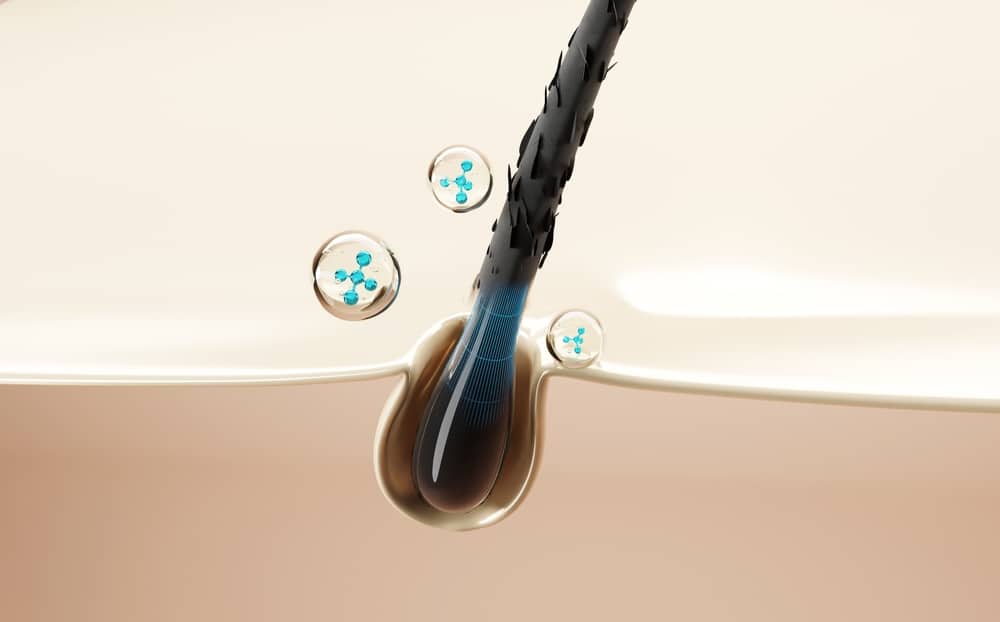
Exosome therapy uses advanced cellular messengers to support follicle repair, reduce inflammation, and promote healthier, fuller hair growth.
PDGF
PDGF (Platelet-Derived Growth Factor) for Hair Restoration
PDGF provides purified growth factors that stimulate follicle activity, support tissue repair, and enhance the natural hair growth cycle.


Thicker, Fuller Hair Starts Here!
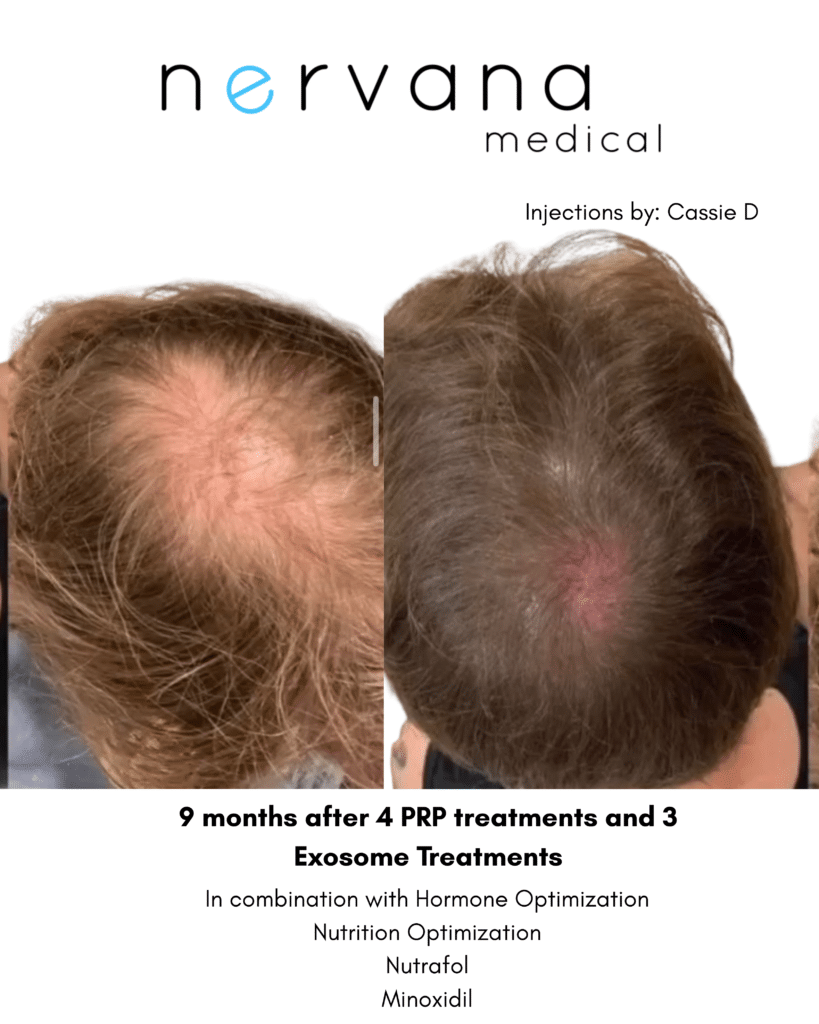
Struggling with hair thinning or loss? We’ve got the solution you’ve been waiting for! Our advanced Hair Restoration Therapy combines advanced PRP, PRF,PDGF or Exosome treatments with microneedling for unparalleled results.
Are These Treatments Permanent?
No treatment completely stops hair loss permanently. These therapies typically:
- Slow progression
- Improve thickness and density
- Support follicle health
Maintenance treatments are often recommended.
How Many Treatments Will I Need?
Typical plans include:
- 3–6 initial treatments spaced about a month apart
- Follow-up evaluation in several months
- Maintenance sessions as needed (typically 1 treatment every 6-12 months)
Your provider will customize this based off of your progress/results.
Do you offer Package Pricing?
Yes, we offer package pricing on all hair restoration services and actually recommend all initial treatments be a package rather than single service to be able to notice results. Single treatments are only recommended for maintenance.
Are Results Immediate?
Hair growth cycles take time. Most patients notice:
- Reduced shedding first
- Gradual thickening over months
- Continued improvement with consistency
We typically reserve about 6 months for noticeable improvements (with compliance in treatment protocol, spaced a month apart)
Are These Treatments Safe?
When performed by trained professionals, they are generally well tolerated. Possible temporary effects include:
- Mild soreness
- Redness
- Swelling
- Temporary scalp sensitivity
Who Is a Good Candidate?
You may benefit if:
- Hair is thinning, but follicles are still active
- Hair loss is early to moderate
- You prefer non-surgical options
- Underlying health factors are addressed
A consultation determines suitability.
Multi-Modality Treatment Approach for Best Results
Hair loss is often caused by multiple underlying factors, which is why at Nervana Medical in Sandy, Utah, we prefer a multi-modality approach to hair restoration that addresses both the scalp and the internal contributors to hair thinning. Rather than relying on a single treatment alone, we recommend evaluating key laboratory markers to identify potential hormonal imbalances, nutrient deficiencies, thyroid dysfunction, or other metabolic factors that may contribute to hair loss. Based on these findings, treatment plans may include regenerative therapies such as PRP, PRF, exosomes, or growth factors, along with topical and oral pharmaceutical options when appropriate to support follicle health and improve hair retention. Nutritional and dietary recommendations are also an important part of our approach, as adequate protein intake, essential vitamins, and micronutrients play a critical role in maintaining healthy hair growth. By combining targeted therapies, medical evaluation, and lifestyle support, our goal is to create comprehensive, personalized treatment plans that deliver stronger, healthier, and more sustainable hair restoration results over time.
Why Choose Nervana Medical for Hair Restoration in Sandy, UT?
At Nervana Medical, you’ll receive expert care from a team of highly trained medical professionals with backgrounds in intensive care, emergency medicine, and advanced aesthetics. We offer non-surgical, scientifically proven hair restoration treatments that are personalized to your unique needs.
Our integrative approach combines modern medicine with integrative wellness, ensuring you receive comprehensive care in a comfortable, unhurried environment. With our convenient Sandy, UT, location and commitment to quality over quantity, we’re dedicated to helping you achieve natural, lasting results and renewed confidence.
Don’t Wait to Feel Confident Again!
Book your consultation today and take the first step toward your best hair yet. Call Nervana Medical in Sandy, UT, at (801) 335-5243.
Understanding Your Hair Loss
Hair loss isn’t one condition; it’s a family of them. Knowing which type you have is the single most important step, because the treatments that work for one type don’t always work for another.
The most common types we see
1. Androgenetic alopecia (pattern hair loss)
This is the most common cause of hair loss in both men and women. It’s genetic and hormone-driven. Specifically, your hair follicles are sensitive to a hormone called DHT (dihydrotestosterone), which gradually shrinks them so they produce thinner, shorter hairs over time.
In men: usually starts at the temples or the crown and progresses in a predictable pattern (the Norwood scale).
In women: usually shows up as a widening part and overall thinning across the top of the scalp, while the frontal hairline stays intact (the Ludwig scale).
Pattern hair loss responds best to treatment when it’s caught early, while the follicles are still alive and producing some hair. Once a follicle has been miniaturized long enough, it can stop growing entirely.
2. Telogen effluvium (stress / illness shedding)
A sudden, diffuse shed, usually 2–4 months after a trigger like a major illness, pregnancy, surgery, severe stress, rapid weight loss, or a new medication. The good news: it almost always grows back once the trigger is resolved. The not-so-good news: it can unmask underlying pattern hair loss and accelerate it if it isn’t addressed.
3. Alopecia areata
An autoimmune condition that causes round patches of complete hair loss. It often comes and goes, and it’s treated very differently than pattern loss, usually with topical or injected steroids, or newer immune-modulating medications. We’ll refer to dermatology when we suspect this.
4. Scarring alopecias
A group of conditions where inflammation permanently damages the follicle. Treatment is time-sensitive: these need to be diagnosed early and managed by a dermatologist to prevent permanent loss.
5. Nutritional, hormonal, and medical causes
Iron deficiency, thyroid disease, vitamin D deficiency, uncontrolled blood sugar, and certain medications can all cause or worsen hair loss. Part of our workup is checking the basics so we’re not treating regenerative therapy on top of a fixable medical problem.
How We Figure Out What’s Going On
A good hair restoration plan starts with a good diagnosis. At your consultation, we’ll do four things:
1. Take a thorough history. When did you first notice it? What’s the pattern? Family history? Medications? Recent illnesses, pregnancy, stress, weight changes? Diet? Hair care routine? Other symptoms?
2. Examine your scalp. We’ll look at the pattern of loss using standardized scales (Norwood for men, Ludwig for women), assess follicle health, and check for signs of inflammation or other changes that point us toward the right diagnosis.
3. Hair pull test. A quick, painless test to see whether you’re actively shedding more than normal.
4. Lab workup (when indicated). Hair loss is often the first sign that something else is off. We commonly check:
- CBC: checks platelet count and screens for anemia
- Ferritin: iron stores (one of the most common reversible causes)
- Vitamin D: affects inflammation and the hair growth cycle
- TSH and full thyroid panel: thyroid disease is a major hair-loss driver
- Hemoglobin A1c and fasting insulin: metabolic health affects follicles
- hs-CRP: measures systemic inflammation
- Vitamin B12 and folate: needed for cellular turnover
- Hormone panel (testosterone, DHEA-S, estradiol, prolactin): when there’s a hormonal pattern
If your insurance covers labs, we’ll send the order through your insurance. If not, we offer competitive cash-pay pricing. If you are interested in obtaining labs to further explore your hair loss (recommended), we will help you get scheduled for a lab consultation.
What Results Look Like
Hair grows in slow, predictable cycles. No treatment produces overnight results, and any clinic that promises that isn’t being honest with you. Here’s the timeline we set for ourselves:
Month 1–2. You may notice a temporary increase in shedding. Counterintuitive, but expected: it’s old hairs being pushed out by new ones entering the growth phase.
Month 3–4. Shedding slows. New, fine hairs (sometimes called ‘vellus’ hairs) start to appear. Hair feels stronger at the root.
Month 4–6. The biggest visible changes show up here. Increased density, thicker individual hairs, and improved coverage in thinning areas.
Month 6–12. Continued, gradual improvement. We re-photograph and reassess at 6 months to decide whether to keep the same protocol, adjust, or shift to maintenance.
We take standardized before/after photos at baseline, 3 months, and 6 months. You’ll see what we see, which makes it easier to know whether we’re on track.
How long results last. Treatments slow the underlying process; they don’t cure it. Most patients need maintenance sessions (every 6–12 months for biologics, daily/ongoing for topical and oral therapies). Stopping treatment entirely usually means losing the gains within a year.
Before and After Your Appointment
The week before and the week after your appointment shape your result. Read our full Hair Restoration Pre/Post Care Guide before your visit, it covers medications and supplements to pause, what to avoid in the first 72 hours, and what’s normal in the weeks that follow.
[nervana_hair_quiz]