Tretinoin is the gold standard for acne, but not the right first step for sensitive or melasma-prone skin. How to start retinoids without wrecking your barrier-
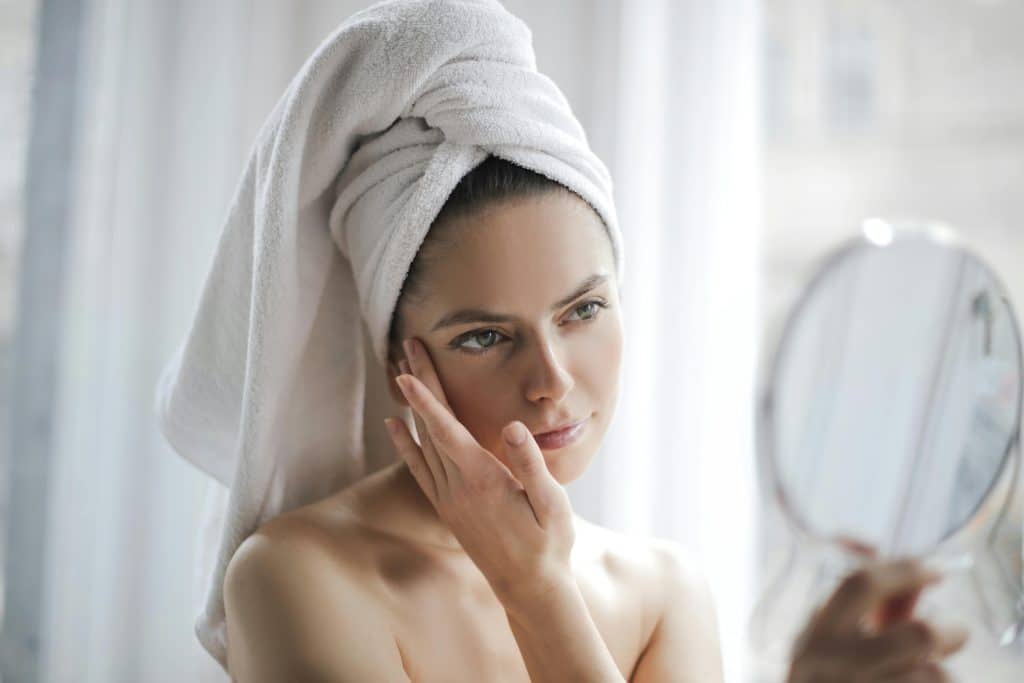
Tretinoin for Acne: Why It’s the Gold Standard, and Why Sensitive or Melasma-Prone Skin Needs a Different Starting Point
If you’ve researched acne treatments, you’ve heard that tretinoin is the gold standard. Dermatologists and medical providers have relied on it for decades. The American Academy of Dermatology lists topical retinoids as first-line therapy for acne, full stop.
Here’s what most patients don’t hear: the strongest treatment is not always the best treatment, especially at the start. For sensitive skin and melasma-prone skin, jumping straight to prescription-strength tretinoin is the fastest way to peeling, inflammation, and new pigment you didn’t have before.
At Nervana Medical in Sandy, UT, we prescribe tretinoin all the time. We also prescribe the ladder below it just as often. This is why.
“I Used Tretinoin Twice and My Skin Got Worse”
We hear this weekly. New patient, prescription in hand from somewhere else, skin peeling, red, tender, actively worse than it was before starting. That’s not a tretinoin failure. That’s a starting point failure.
Tretinoin is retinoic acid in its already-active form. Your skin doesn’t have to convert it. It goes to work the instant it’s applied. That’s why it works so well, and why it hits so hard.
Research shows that tretinoin disrupts the skin barrier at the cellular level. Specifically, it downregulates tight junction proteins like claudin-1 and alters lipid metabolism in the stratum corneum. This is the mechanism behind the peeling, dryness, and irritation most people experience early on. It is not a bug. It is how the drug works.
About 30% of patients experience significant irritation from topical retinoids, including burning, stinging, scaling, and dryness. For many, especially those with sensitive or reactive skin, this barrier disruption is severe enough that they quit. A medication you stop using does not work.
Retinol vs Tretinoin: The Key Difference
Retinol must be converted by the skin through multiple enzymatic steps before it becomes active retinoic acid. The conversion is lower, slower, and more forgiving.
That’s why retinol doesn’t produce results as quickly as tretinoin. It’s also why it’s a far better entry point for sensitive and pigment-prone skin.
The Two Situations Where We Slow Down Before Prescribing Tretinoin
1. Sensitive Skin
Sensitive skin is not a personality type. It’s a clinical finding: impaired barrier function, heightened reactivity, and often an altered skin microbiome. The skin has less capacity to absorb the stress that any retinoid introduction creates.
Starting sensitive skin on standard-strength tretinoin makes the adaptation period brutal. A brutal adaptation period means patients quit, or develop secondary inflammation problems from chronic irritation.
The smarter path: start with a lower-strength retinol, build the barrier, and work up. A 2025 multi-omics study tracked what actually happens during retinol adaptation and found a clear biphasic response:
- Acute disruption phase: increased transepidermal water loss, altered pH, reduced sebum
- Re-equilibration phase: barrier restoration through metabolic reconstitution
In plain terms: your skin can adapt to retinoids, but it needs the right entry point and enough time to do it without derailing.
A separate study comparing 0.3% and 1.0% retinol found that the lower concentration produced comparable improvements in skin quality with fewer adverse events and better compliance. Consistency over time beats a high dose you can’t sustain.
2. Melasma and Pigment-Prone Skin
This is the situation where well-intentioned prescribing can backfire in a visible, frustrating way.
Tretinoin can help with melasma. Used too aggressively, it can make melasma worse.
Patients with melasma have measurably impaired skin barrier function: higher transepidermal water loss after barrier disruption, slower barrier recovery, and subclinical inflammation even in skin that looks normal. When the barrier is disrupted and inflammation follows, the skin’s pigment cells read that as a signal to produce more melanin. The compromised barrier then allows that melanin to deposit deeper into the dermis, where it’s harder to treat.
So when someone with melasma starts tretinoin and experiences irritation, the irritation itself can worsen the very thing they were trying to fix.
This isn’t a reason to avoid retinoids. It’s a reason to approach them carefully, with barrier support, often with a hydroquinone priming protocol in place first, and always with SPF discipline. Our priming protocol for melasma and pigment-prone skin is here.
The Retinoid Ladder: Where to Actually Start
At Nervana Medical, we carry the full range of retinoid strengths precisely so we can match your starting point to where your skin is right now, not where we want it to end up:
- Gentle retinyl ester serums (entry level for the most reactive skin)
- 0.25% – 0.5% retinol (standard starting range for sensitive skin)
- 1% retinol (tolerant skin, advanced maintenance)
- Prescription tretinoin 0.025% – 0.1% (after the barrier is ready)
Starting at the bottom of this list is not giving up. It’s building the tolerance your skin needs to eventually handle the stronger option without constant irritation dragging you backward.
You can shop our medical-grade retinoids here, or come in for a consultation so we can match strength to your skin.
How to Start a Retinoid Without Destroying Your Skin
These are the techniques that make the difference between a successful retinoid introduction and three weeks of regret.
Start slow. One to two nights per week for the first two to three weeks. Then every other night. Then nightly, only if your skin is tolerating it without significant peeling or burning. There’s no prize for rushing.
Use the Sandwich Method if you’re sensitive:
- Apply your regular moisturizer to clean, dry skin
- Apply a pea-sized amount of your retinoid over the moisturizer
- Apply a second thin layer of moisturizer on top
Buffering the retinoid this way slows penetration and reduces the intensity of the initial response. You still get the benefits. The adjustment period is just less punishing.
Always apply to completely dry skin. Wait at least 20 minutes after cleansing. Wet skin drives faster absorption, which intensifies irritation without improving results.
Sunscreen is non-negotiable. Mineral SPF 30+ every single morning. Retinoids increase photosensitivity, and UV exposure will undo your progress, especially if you have melasma.
When Tretinoin Is the Right First Step
For patients with resilient skin, no active barrier damage, no melasma history, and active inflammatory acne, tretinoin as a starting point is often exactly right. It’s effective, inexpensive, and well-studied. We prescribe it frequently.
The point is simple: prescribing should match the patient, not the protocol. Tretinoin is a tool. So is retinol. So is barrier repair. So is hydroquinone priming. The right one depends on your skin.
Medical Skincare in Sandy, Utah
If you’re in Sandy, Draper, Cottonwood Heights, or anywhere in the Salt Lake Valley and you’re not sure whether your skin can handle tretinoin, or you’ve tried it and it went badly, come in. We’ll look at your skin, ask about your history, and build a protocol that gets you the results without wrecking your barrier first.
Book a medical skincare consultation in Sandy, UT →
Cassie Debenham, APRN, is a licensed aesthetic provider at Nervana Medical in Sandy, Utah. She specializes in medical-grade skincare, injectables, and treatment planning for sensitive and pigment-prone skin. All clinical content is written or reviewed by our medical director.
Related reading: