Facial aging is a complex, gradual process that affects far more than just the surface of the skin. At Nervana Medical in Sandy, Utah, we focus on helping patients understand why the face changes over time; because effective, natural-looking rejuvenation starts with education. Facial aging begins deep beneath the skin, with changes to the facial bones, fat compartments, muscles, ligaments, and skin occurring years before wrinkles or sagging become obvious. By understanding how bone loss, volume shifts, and skin changes contribute to facial aging, patients can make more informed decisions about treatments such as dermal fillers, biostimulators, RF microneedling, regenerative therapies, and advanced aesthetic injectables; often achieving better, longer-lasting results.
The most important thing to understand:
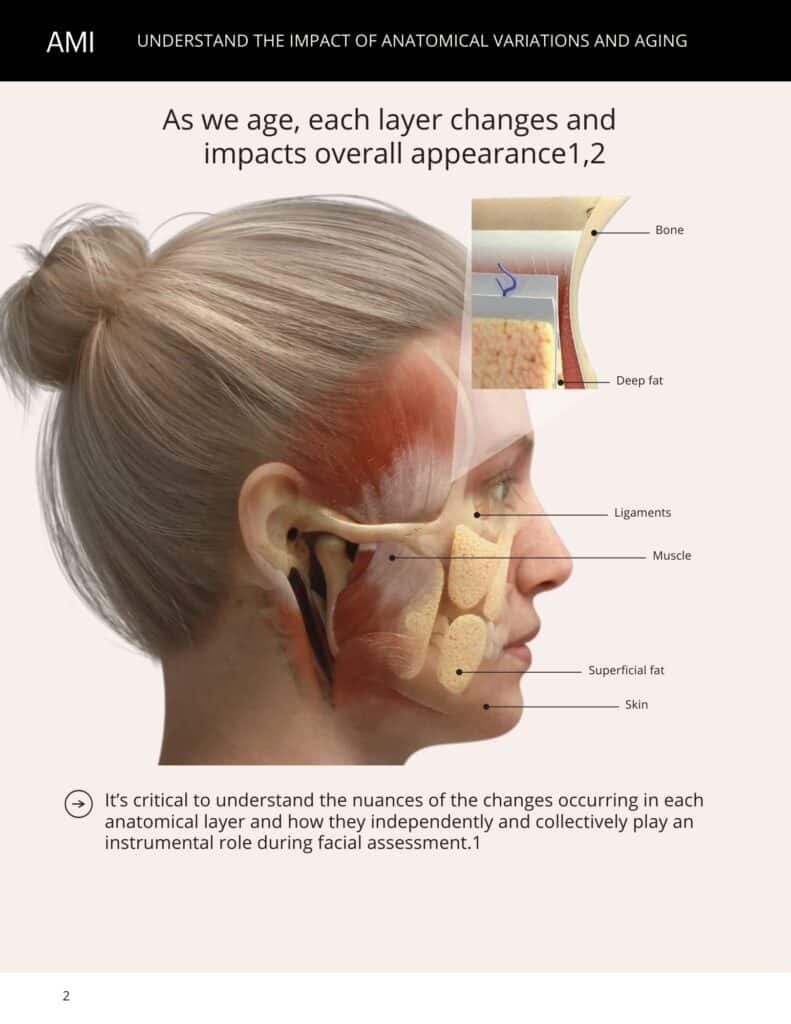
Aging begins on the inside and works its way outward.
1. Bone Changes: The Foundation Shrinks Over Time
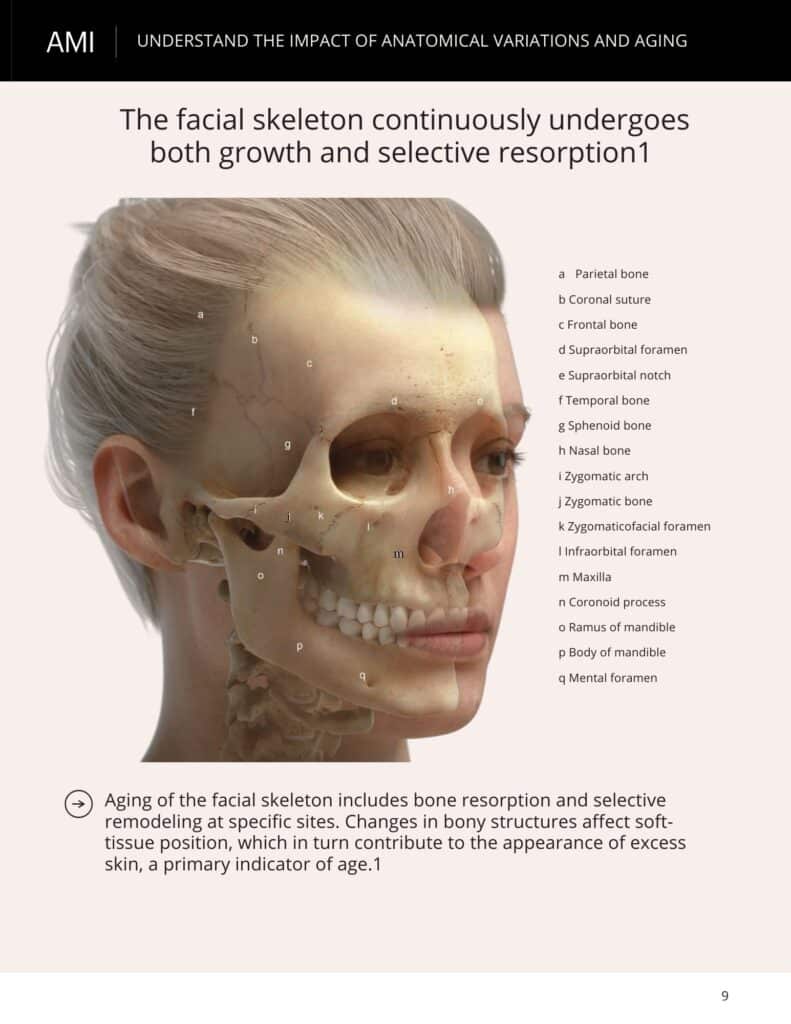
Your facial bones act like the framework that supports your skin and soft tissues. As we age, that framework slowly shrinks and changes shape.
- Bone loss can begin as early as the late 20s to early 30s
- It speeds up around ages 40–50, especially in women
- After menopause, bone loss often accelerates
Common bone-related changes include:
- Eye sockets widen, making eyes look more hollow or tired
- The midface (cheeks and nose area) loses support
- The jawline becomes less defined
- The chin and jaw shorten slightly, contributing to jowls
These changes happen before sagging skin becomes obvious, which is why aging can suddenly feel like it “appears overnight.”
2. Soft Tissue Changes: Volume Shifts and Sagging
As the bony foundation changes, the fat and soft tissue above it respond.
- Some fat pads shrink (especially in the cheeks and temples)
- Other fat pads shift downward, collecting in the lower face
- Facial ligaments weaken, allowing tissues to sag
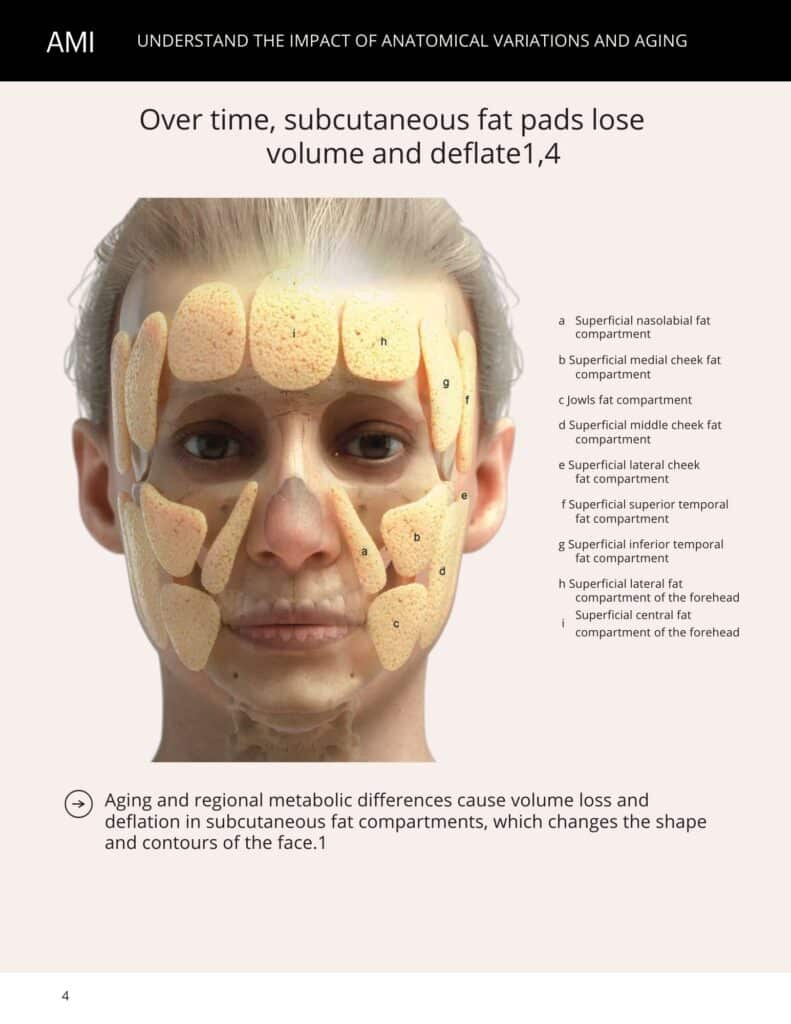
This contributes to:
- Deepening smile lines
- Jowls
- Heavier lower cheeks
- A tired or droopy appearance
3. Muscle Changes: Subtle but Important
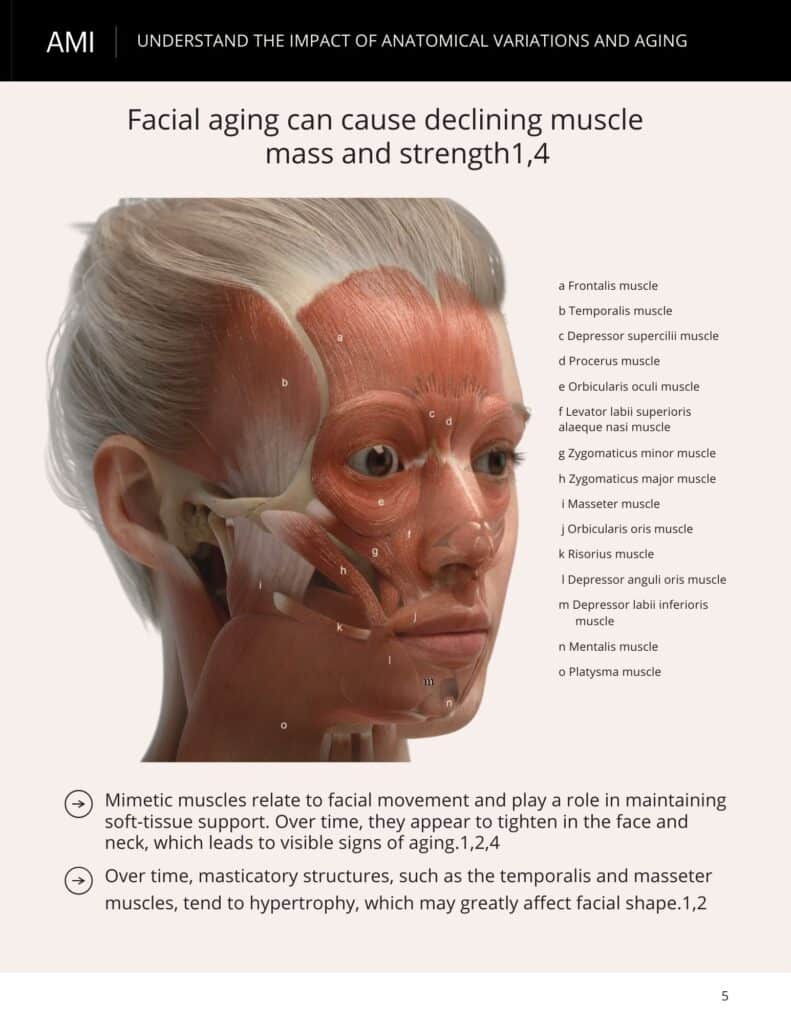
Facial muscles also change with time:
- Some muscles thin or weaken
- Others become overactive, contributing to lines and tension
These changes vary by area and person but can affect facial balance and expression.
4. Skin Changes: The Part Everyone Notices
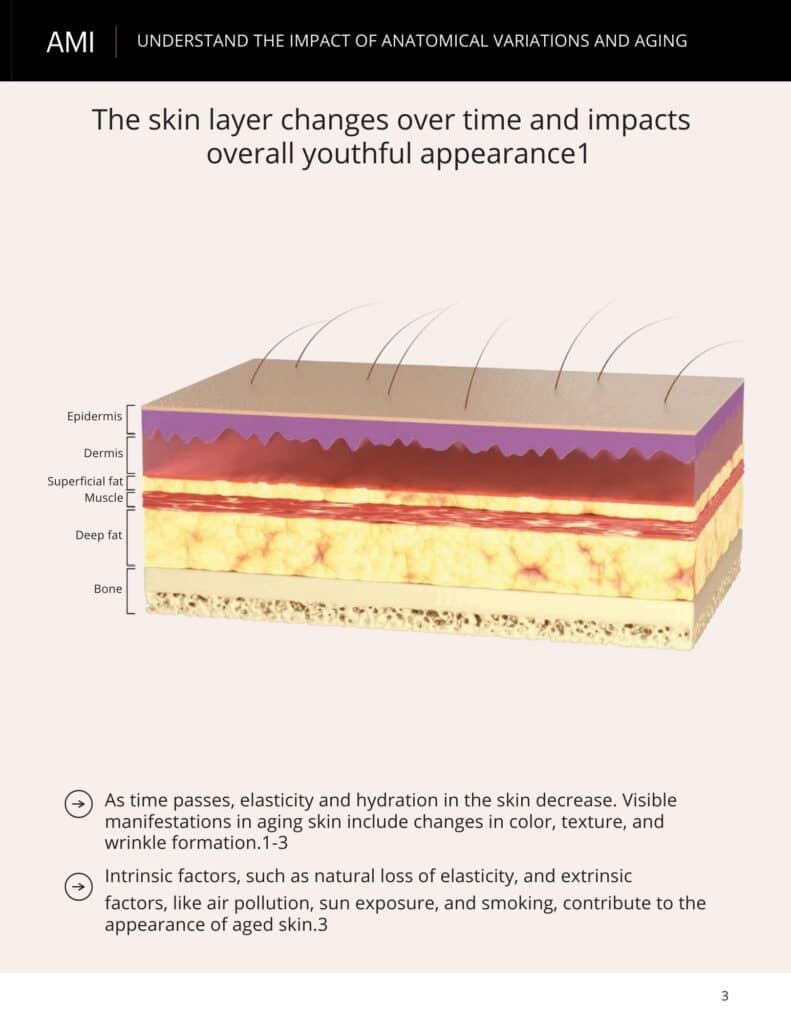
The skin is usually where aging becomes visible, but it’s often the last layer affected.
With age:
- Collagen and elastin production slows
- Skin becomes thinner and less elastic
- Healing takes longer
- Sun exposure accelerates aging
This results in:
- Wrinkles
- Laxity
- Uneven pigmentation
- Broken capillaries
- Thinning lips
5. Differences Between Women and Men
- Women often experience a noticeable acceleration in facial aging around menopause due to hormonal changes and bone loss
- Men tend to age more gradually
- Facial aging patterns can also vary based on ethnicity and genetics
Why This Matters for Aesthetic Treatments
One of the most important takeaways from modern research is this:
Bone loss happens first. Soft tissue sagging happens later.
This means:
- Treating only wrinkles or skin laxity may not fully address the root cause
- Supporting the underlying structure earlier can help preserve facial balance
- A layered, strategic approach often produces more natural and longer-lasting results
The Big Picture
Facial aging is not just about skin; it’s about structure, support, and balance.
Understanding how the face changes over time allows for:
- More natural-looking rejuvenation
- Better long-term outcomes
- Treatments that work with the aging process, not against it
The key to natural facial rejuvenation is not simply “filling or fixing wrinkles,” but restoring balance, support, and structure as the face ages. Because skeletal changes often occur decades before visible skin laxity, a proactive, layered approach to facial aesthetics can help preserve facial harmony and slow the appearance of aging over time. At Nervana Medical, our aesthetic consultations are designed to evaluate facial aging from the inside out, allowing us to tailor treatments that support bone structure, soft tissue integrity, and skin health. Whether you are exploring preventative treatments in your 30s or comprehensive rejuvenation in later decades, understanding how the face ages helps you to choose safer, more effective, and more natural-looking solutions.