
A clinician’s guide to dosing, timeline, and what to tell patients about symptom recovery.
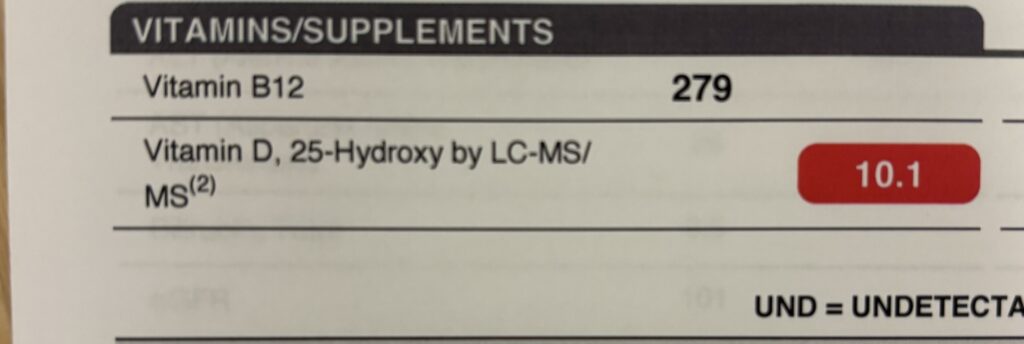
Vitamin D deficiency remains one of the most common and most under-treated findings on a routine metabolic workup. A 25(OH)D below 20 ng/mL is the threshold for deficiency, and patients arriving with levels in the single digits or low teens are not uncommon, particularly those presenting with fatigue, poor sleep, diffuse myalgias, or new mood symptoms. Repletion is straightforward, well-tolerated, and produces measurable symptom improvement on a timeline most patients find motivating. The challenge is less about whether to treat and more about choosing the right protocol, setting the right expectations, and structuring appropriate follow-up.
When to suspect deficiency
The textbook presentation: bone pain, proximal muscle weakness, secondary hyperparathyroidis; is the late-stage picture. In practice, deficiency more often shows up as persistent fatigue, unrefreshing sleep, low mood, and vague musculoskeletal complaints. Patients with limited sun exposure, darker skin pigmentation, higher BMI, malabsorptive conditions, chronic kidney or liver disease, or on long-term anticonvulsants or glucocorticoids carry the highest pretest probability. A serum 25(OH)D level is the appropriate diagnostic test. Levels under 20 ng/mL define deficiency; 20–30 ng/mL is insufficiency; the typical target after repletion is greater than 30 ng/mL. We shoot for an optimal level of 60-80 ng/mL.
Repletion: choosing a protocol
For uncomplicated deficiency, the Endocrine Society’s protocol of 50,000 IU cholecalciferol (D3) once weekly for 8 weeks remains the most widely used regimen and is the default at our practice. It is well-tolerated and supported by decades of clinical use. An equally evidence-supported alternative is 5,000 IU daily for 8–12 weeks (orally), which produces comparable repletion and may suit patients who prefer a daily routine or have adherence issues with weekly dosing.
For severe deficiency, particularly 25(OH)D below 10 ng/mL with prominent symptoms, there is published data supporting a more aggressive loading approach: a single 300,000 IU or two consecutive daily 300,000 IU doses (600,000 IU total), will raise serum levels above 20 ng/mL within one week in roughly 98% of patients. This is a reasonable option in patients who are highly symptomatic or in whom rapid repletion is clinically warranted, though most outpatient cases do not require it.
In our clinic, we typically start with 50,000 IU weekly × 8 weeks for deficiency at or near 10 ng/mL, reserving high-dose loading for severe symptoms or particularly low baseline values.
Maintenance therapy
After repletion, ongoing supplementation is required to maintain adequate levels. 1,500–2,000 IU daily of cholecalciferol is the standard maintenance dose for most adults. 50,000 IU twice monthly is an acceptable alternative for patients who prefer less frequent dosing. Maintenance is indefinite for most patients given persistent risk factors.
Counseling patients on the timeline
Setting realistic expectations is one of the more useful things we can do at the time of prescribing. Patients tend to expect either too much, too fast or nothing at all.
The available evidence is reassuring on both fronts. In a double-blind RCT, a single 100,000 IU dose of D3 produced significant improvement in self-reported fatigue within four weeks (mean FAS decrease of −3.3 vs. −0.8 in placebo, p=0.01), with 72% of patients reporting fatigue amelioration. Muscle function follows a similar trajectory: skeletal muscle mitochondrial oxidative capacity improves measurably with repletion in symptomatic deficient adults, correlating with improved fatigue scores, and most parameters of muscle strength improve by three months.
Sleep quality also responds. A meta-analysis of dietary supplements for sleep found vitamin D produced a significant improvement in subjective sleep quality (mean difference −1.63 on validated sleep quality scales). Population data suggest that each 1 ng/mL rise in 25(OH)D reduces the probability of poor sleep quality by roughly 4.2%. The proposed mechanism involves vitamin D receptors in brainstem and hypothalamic regions regulating the sleep-wake cycle, as well as a role in the melatonin synthesis pathway.
The practical message to patients: expect noticeable improvement in fatigue and sleep within 4–8 weeks of starting supplementation, with continued gains over the following months.
Follow-up
Recheck serum 25(OH)D at 8–12 weeks after starting repletion to confirm adequate response. The target is greater than 30 ng/mL. Patients who fail to respond despite documented adherence warrant evaluation for malabsorption (celiac disease, bariatric surgery history, exocrine pancreatic insufficiency), medication interactions, or, rarely, a 1-alpha-hydroxylase issue. Once repletion is confirmed, transition to maintenance dosing and recheck annually.
If labs are pending and the patient is on supplementation, hold vitamin D for at least one week before the draw to avoid artificially elevated values that obscure the baseline.
A note on co-supplementation
Patients commonly arrive having read that magnesium is necessary for vitamin D activation, or that K2 is required for proper calcium handling. Magnesium is a reasonable add-on in patients with concurrent symptoms of insomnia or muscle cramping and is generally well-tolerated at 200–400 mg of magnesium glycinate at bedtime.
At Nervana Medical, we work up vitamin D as part of our comprehensive hormone panels. If you have a patient whose fatigue, sleep, or mood symptoms aren’t fully explained by their workup so far, we’re happy to take a look at the broader picture, labs, lifestyle, and targeted repletion where it’s indicated. Reach out anytime.