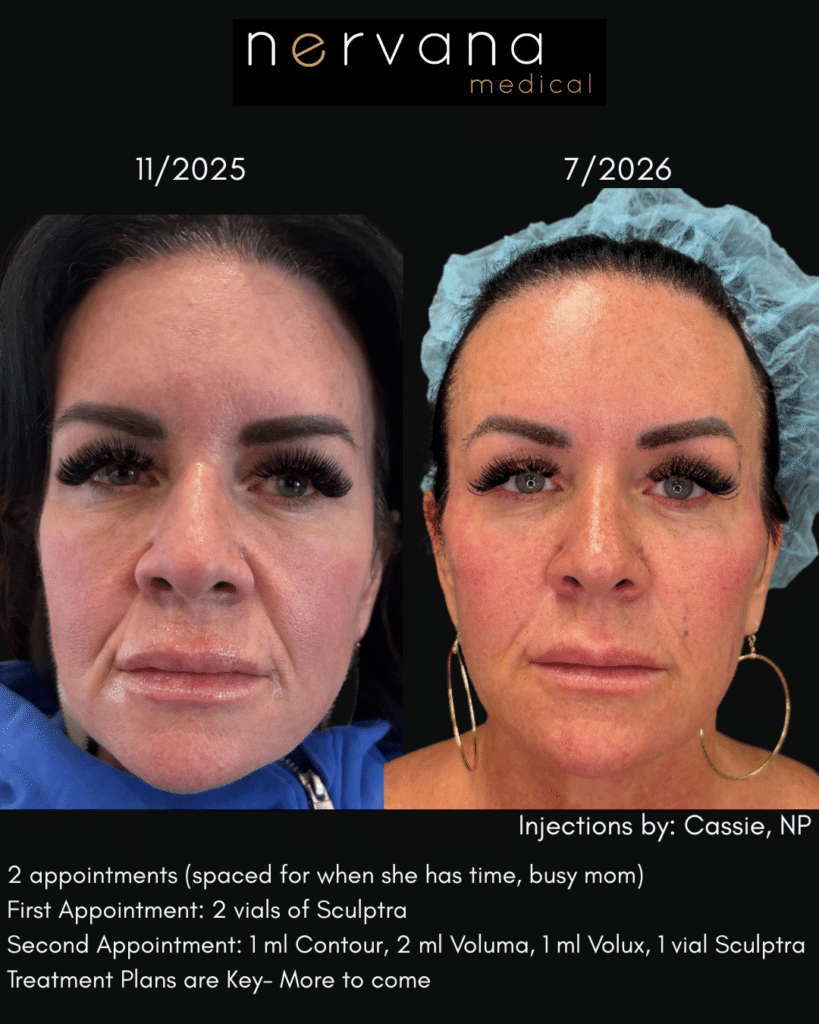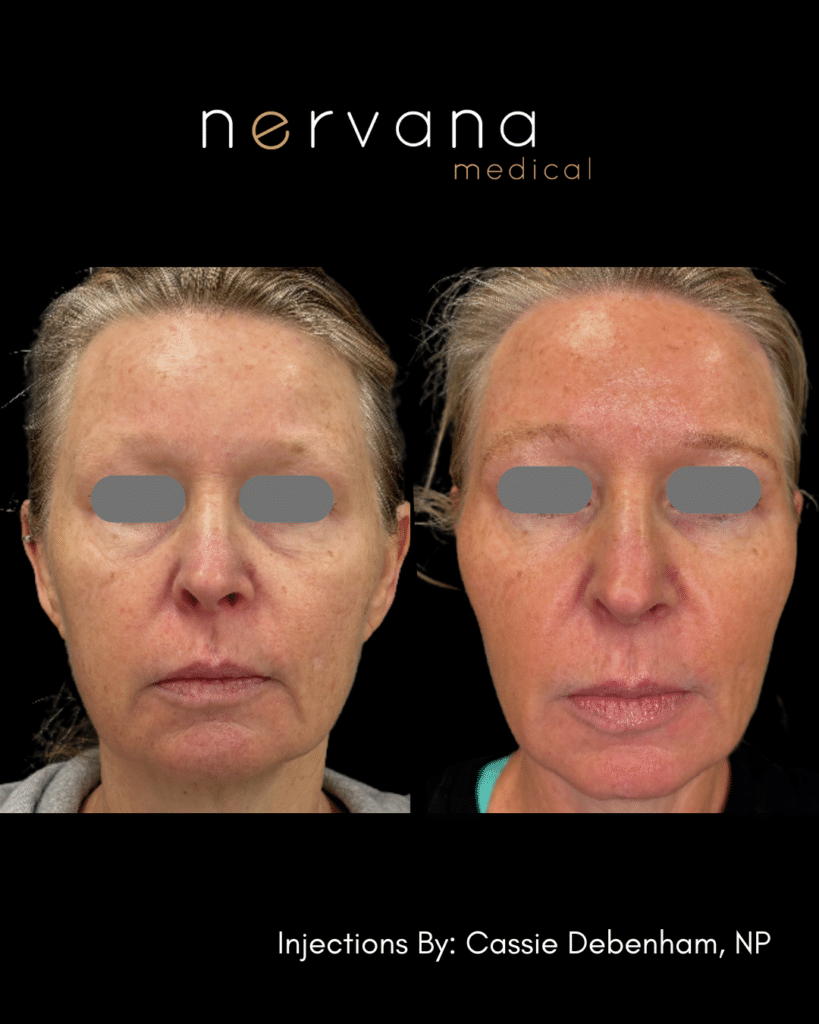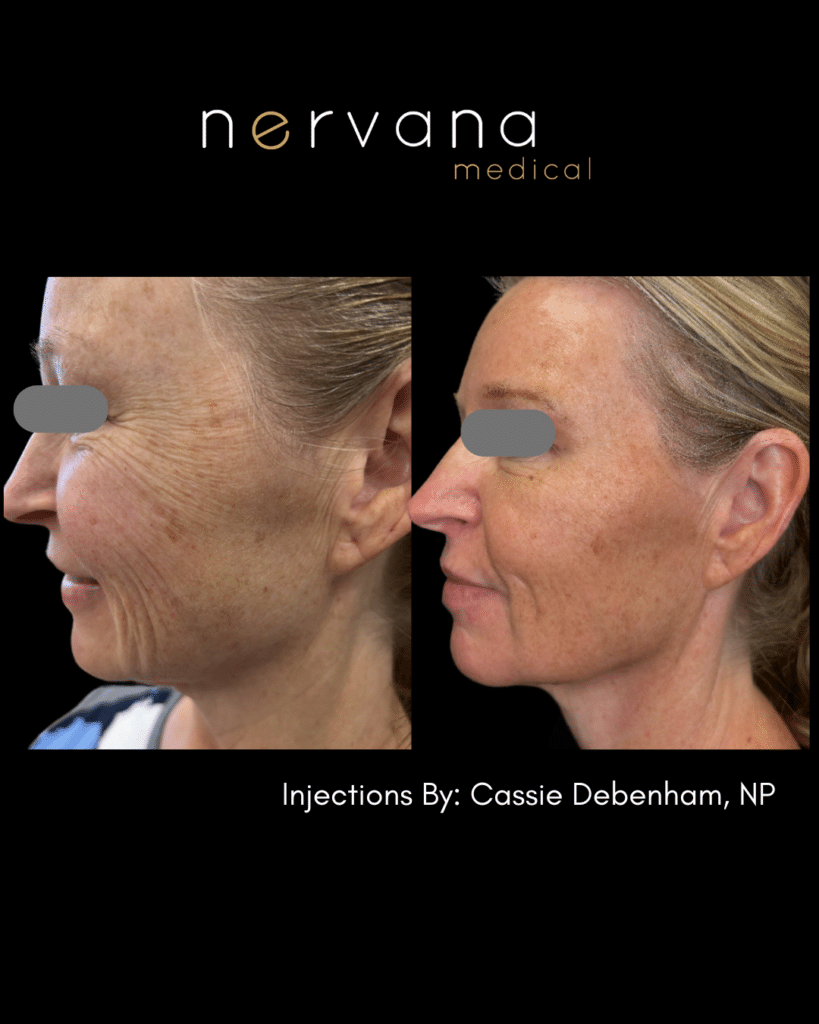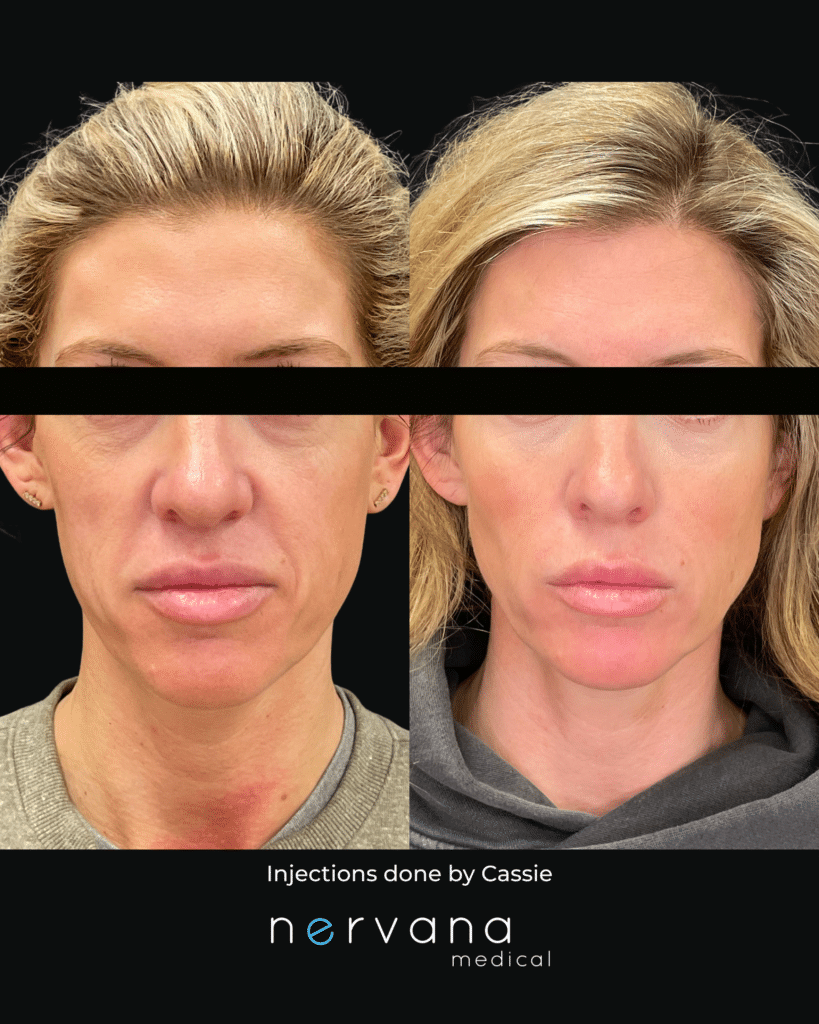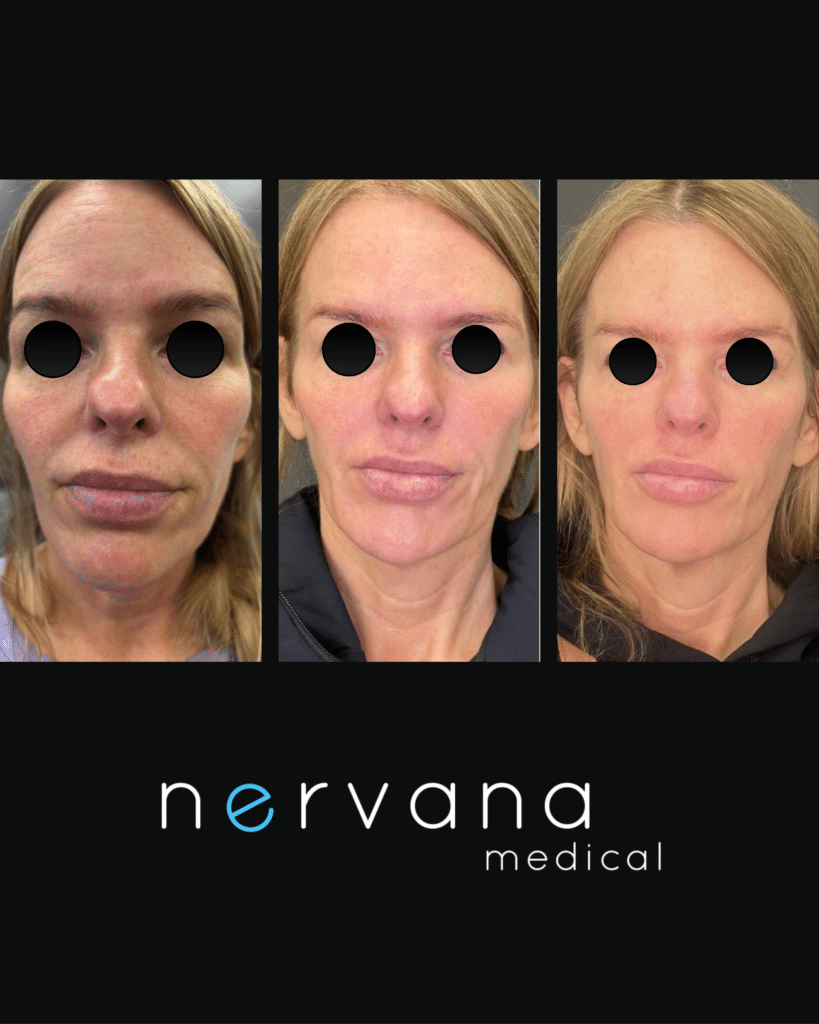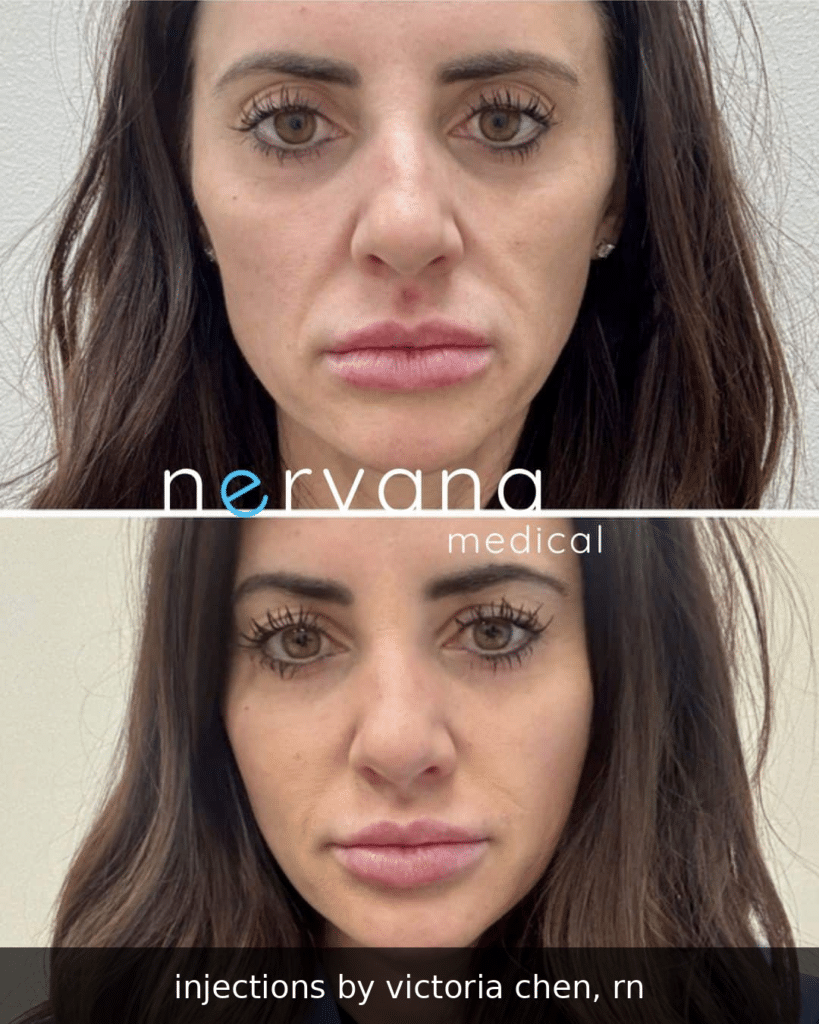
People ask this as if one product wins. It does not. Sculptra vs filler is a job-description question. One rebuilds collagen over months. One places volume you can see before you leave the parking lot. At Nervana Medical in Sandy, UT, we use both, often in the same face, because they solve different problems.
If you want the short version: hyaluronic acid filler is for shape, restoring fat loss in superficial and deep fat compartments and balancing facial proportions. Sculptra is for the scaffold that has thinned, the collagen loss that contributes to skin laxity.
What is the actual difference?
Hyaluronic acid filler is a gel. We place it where a feature needs support. It helps with immediate volume restoration. You see the change the same day. Swelling still has to settle, usually over two to four weeks, but the product itself is there. If we do not like a result, hyaluronidase can dissolve most HA gels, though it is not always as simple as it sounds. Longevity is typically 9 months to about 24 months, longer in some midface products, and shorter in high-movement areas like lips.
Sculptra is poly-L-lactic acid (PLLA-SCA), a biostimulator. Often described as the same family of material used in absorbable sutures. The vial is mixed with sterile water. That water is what you see on day one. It is not the result. Over the next days the fluid absorbs, the wrinkle or hollow often looks like it came back, and then fibroblasts start laying down collagen along the PLLA particles. Galderma’s cheek studies report some patients seeing change as early as one month. Peak structure is closer to three to six months. Labeling studies followed some subjects to about 25 months after the last session. Their consumer language is “up to 2 years.” Age, metabolism, and how many vials you actually completed all matter. Of note, the study only lasted for 25 months!
Most faces that do well on Sculptra need a series. The typical plan is 2 to 3 sessions, at 4 to 6 weeks apart, sometimes up to 8 weeks so we can see what the last session actually built before we add more. One vial is rarely a rebuild. Typically, people need a vial per decade of life for initial rejuvenation and 1-2 vials for annual maintenance thereafter.
On the U.S. label, Sculptra is for people with healthy immune systems, for shallow-to-deep nasolabial folds, cheek wrinkles, and other facial wrinkles (smile lines, marionettes, chin). It is not a lip product and it is not an under-eye product.
Radiesse is another biostimulator we carry. This post is Sculptra versus hyaluronic acid filler, because that is the comparison people actually search. If calcium hydroxylapatite is the better tool for your jawline or hands, we will say so in the room.
Where does each one belong?
Sculptra earns its keep in areas of global deflation and thinning skin: cheeks and midface, temples, the lower face when nasolabial folds and marionettes are really a support problem, and along a softening jawline. Galderma’s cheek data is why we talk about skin quality, not just fill: glow, tightness, firmness, and jawline contour that can still look better two years later in their trials.
It also thickens skin in a way a syringe of gel does not. We use it on the body too, including Sculptra butt lift, knees, thighs, and abdomen, when the goal is collagen. Those body uses are off-label in the U.S. The FDA aesthetic indication is the face. We still do body work when it is the right tool, and we say that out loud.
Hyaluronic acid filler earns its keep when the target is precise. A chin that needs projection. A jawline that needs an edge, not just thickness. A cheek that needs lifted.
If the complaint is “this one line,” filler is usually the conversation. If the complaint is “I look deflated” or “I do not want to look done,” Sculptra is usually the conversation. If both are true, we stack them.
The long haul treatment plan is usually what provides the most natural results over time, because that “one line” likely stems from a more foundational deficeit.
What should you expect after each one?
Filler day: cleanse, optional topical, needle or cannula, you leave with a visible change and a two-week settle rule before we talk about corrections. Bruising and swelling are normal. Vascular warning signs are not. Dusky or white skin, mottling, severe pain, or a cool patch means you call us the same day, not the next morning. Sculptra can occlude a vessel too. Same phone call if the skin looks wrong. Ensure you follow pre-treatment instructions for best results/minimize the risk for bruising.
Sculptra day: multiple small deposits, often in a grid where that technique fits. You will look fuller from the water. That fades. Then you massage. Galderma still prints the 5-5-5 rule in the instructions for use: five minutes, five times a day, for five days, with moisturizer-level pressure. Yes, we know there is a small randomized trial (Wu and Goldman, Dermatologic Surgery, 2016, twenty patients) that found no difference in nodules with modern dilution. When a protocol has worked for us this long, we are going to keep doing it until there is an abundance of studies that tell us otherwise. Avoid hard workouts, saunas, and alcohol for a day. Galderma says makeup is fine after several hours if nothing looks wrong. In our room we still wait 24 hours so the port holes can close. Clean pillowcases are also a must.
Small firm spots can show up and usually soften with time and massage. Delayed nodules, sometimes months later, are uncommon and are still a real risk we discuss before the first vial. Superficial placement and thin skin raise that risk. Sculptra is not dissolvable with hyaluronidase. That is the trade for collagen that can outlast a gel.
Who should not get it: allergy to PLLA, carboxymethylcellulose, or mannitol; a history of keloids or hypertrophic scars; and we do not treat through an active sore, rash, or infection. Safety has not been established in pregnancy, lactation, or under age 18. No allergy skin test is required beforehand. It is synthetic, not human or animal collagen.
Can you do both?
Yes. That is often the better plan, not a compromise. Sculptra rebuilds the mattress. Filler places the pillow. We have a gallery of Sculptra plus HA for a reason. Galderma’s own Sculpt and Lift protocol is built on that pairing after weight loss: Restylane for shape you can see that day, Sculptra for collagen over the following months. This is exactly where Nervana’s Sculpt and Lift packages were built from.
A common sequence: start the Sculptra series for skin quality, then use HA where you want an edge or a feature, sometimes in the same appointment or after the water from Sculptra is gone. People coming off significant weight loss, including GLP-1s, are the group where this pairing shows up most. The longer versions of that story are already on the site. This post is the simpler fork: which product, for which job.
How do you choose in a consult?
Bring a goal, not a product name. “I have a wedding in three weeks” is filler, or it is wait. Sculptra will not peak for a wedding next month. “I want to look like myself in a year without a top-up every six months” is Sculptra, or Sculptra plus a small amount of HA.
We look at bone, fat pads, skin thickness, and how much movement is in the area. We also look at what you will actually do after. If you will not massage, Sculptra is a worse idea than a gel you can dissolve. If you want lips, we are not talking Sculptra.
New filler patients at Nervana often start with a planned, multi-area approach rather than one fashionable zone. That is facial balancing, not a one-syringe dare. Sculptra is planned the same way: vials and sessions, not a single hopeful injection.
Frequently asked questions
What lasts longer, Sculptra or filler?
Sculptra’s collagen effect is the longer of the two for most people. Galderma cites up to 2 years after a completed series. HA filler is measured in months, sometimes up to about 2 years in the midface (and more recently, we are seeing it last for even longer!). Maintenance is still part of both.
Does Sculptra look instant?
No. Day-one fullness is water. Some study patients notice change by a month. Real structure is gradual. If you need a result you can photograph this weekend, that is filler.
Can Sculptra be dissolved?
No. Hyaluronidase works on hyaluronic acid, not PLLA. Placement and aftercare matter more because of that.
Is Sculptra safer than filler?
Different risks, not a safety contest. HA filler has a vascular-occlusion conversation and a dissolve option. Sculptra has nodules, the massage requirement, no dissolve option, and its own vascular warning on the label. Both belong with an injector who treats those as real, not rare enough to skip.
Can I get Sculptra in my lips or under my eyes?
No. The U.S. label says do not inject the red of the lip. The eye area has not been studied and has a higher published nodule risk. Those zones are HA, or they are a different treatment entirely.
Is Sculptra on the butt, knees, or abdomen FDA-approved?
No. Those are off-label uses we offer when collagen and contour are the goal. The approved aesthetic indication is the face.
Do I have to choose one?
No. Many of our plans use both.
Book the consult, not the product, in Sandy, UT
A useful visit is a face map, not a sales pitch for a vial. We will tell you whether Sculptra, hyaluronic acid filler, both, or neither is the honest next step, and we will not pretend they are interchangeable.
Book a consult at Nervana Medical, 8899 South 700 East #125, Sandy, UT, or call (801) 335-5243.
Before & After
Real Nervana patients. Individual results vary. See more in the gallery.